
How Do Security Services Adapt to California Fire Conditions?
In the face of increasing wildfire incidents in California, security services are tasked with adapting to protect lives and property efficiently. Let’s explore how these services evolve to meet the challenges posed by fire conditions.
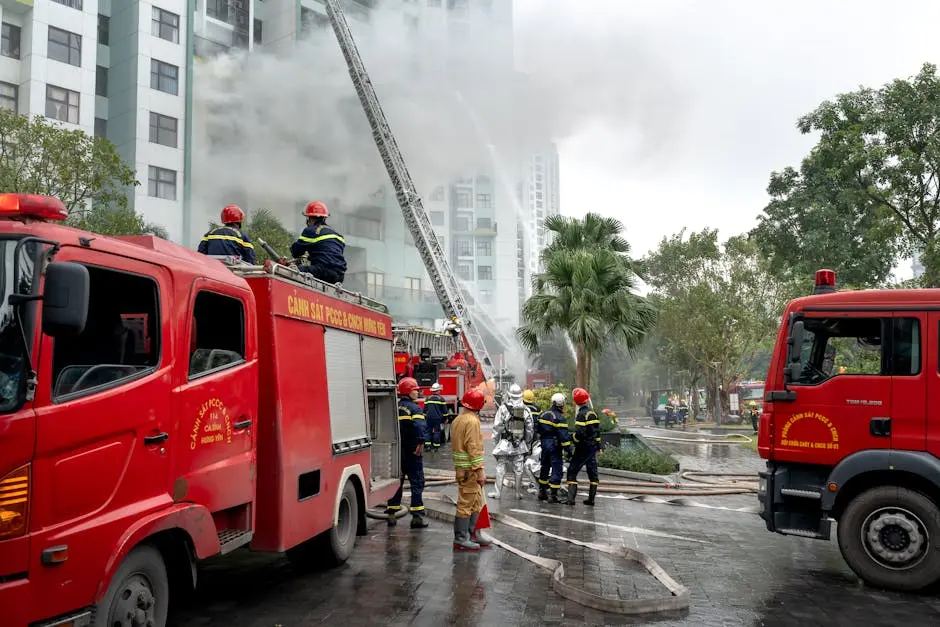
Understanding California’s Fire Risks
Recognizing the unique landscape and climate challenges that escalate wildfire risks across California is fundamental for effective security adaptations.
California’s arid climate, characterized by prolonged droughts and dry vegetation, creates an environment conducive to wildfires. The state’s geographical diversity, spanning forests, mountains, and urban areas, adds another layer of complexity. Security services must understand these variables to tailor their strategies effectively. Additionally, climate change exacerbates the frequency and intensity of these fires, making it crucial for continuous monitoring and updating of risk assessments.
Implementing Specialized Training Programs
Security personnel undergo rigorous fire-specific training to respond appropriately during emergencies, ensuring they are prepared for evacuation procedures and risk assessments.
Training programs are not a one-time event. They include regular drills, simulations, and updates on the latest fire management techniques. This ensures that security teams are not only reactive but also proactive in minimizing fire risks. By understanding the science of fire behavior, personnel can make informed decisions on containment and evacuation routes, which is crucial in saving lives and property.
Furthermore, these programs often involve collaboration with fire behavior experts who provide insights into effective strategies tailored to California’s specific conditions. The use of case studies from past wildfires allows security teams to learn from previous challenges and successes.
Utilizing Advanced Technology
Incorporating state-of-the-art technology, like drones and real-time monitoring systems, enhances situational awareness and early response capabilities.
Drones equipped with thermal imaging cameras can detect heat signatures and smoke plumes, even in low visibility conditions, providing critical real-time data to response teams. GPS and mapping technologies help in planning evacuation routes and distance measurements. These technologies enable rapid decision-making, which can be the difference between containment and escalation of a fire.
Moreover, predictive analytics powered by AI can forecast fire patterns and spread, allowing for preemptive measures and resource deployment. By integrating these technologies, security services can stay a step ahead, mitigating risks before they materialize into large-scale emergencies.
Coordinating with Fire and Emergency Services
Collaboration and communication with local fire departments and emergency services is crucial for successful operations and resource sharing during crises.
Security services work closely with fire departments in joint operation centers to coordinate actions effectively. This synergy ensures that all teams are aligned in their tactical approach, sharing real-time information that can alter the course of an operation. Joint exercises conducted periodically also enhance this coordination, ensuring that all emergency responders speak the same language during an incident.
Community Engagement and Preparedness
Security services also focus on educating and preparing communities, ensuring residents are knowledgeable about safety protocols and evacuation plans.
Community outreach programs are essential. They involve workshops that educate residents on wildfire risks and safety measures, such as creating defensible spaces around homes and understanding evacuation alerts. By fostering a culture of preparedness, security services empower communities to act swiftly and calmly in the event of a wildfire, reducing panic and ensuring orderly evacuations.
Additionally, security services often distribute educational materials and resources that include contact information for local emergency services and step-by-step guides for evacuation planning.
Conclusion: Staying Ahead in Wildfire Conditions
Adapting to the challenging fire conditions in California requires security services to be proactive, flexible, and informed. Through specialized training and strategic coordination with other emergency services, they play a crucial role in safeguarding communities.